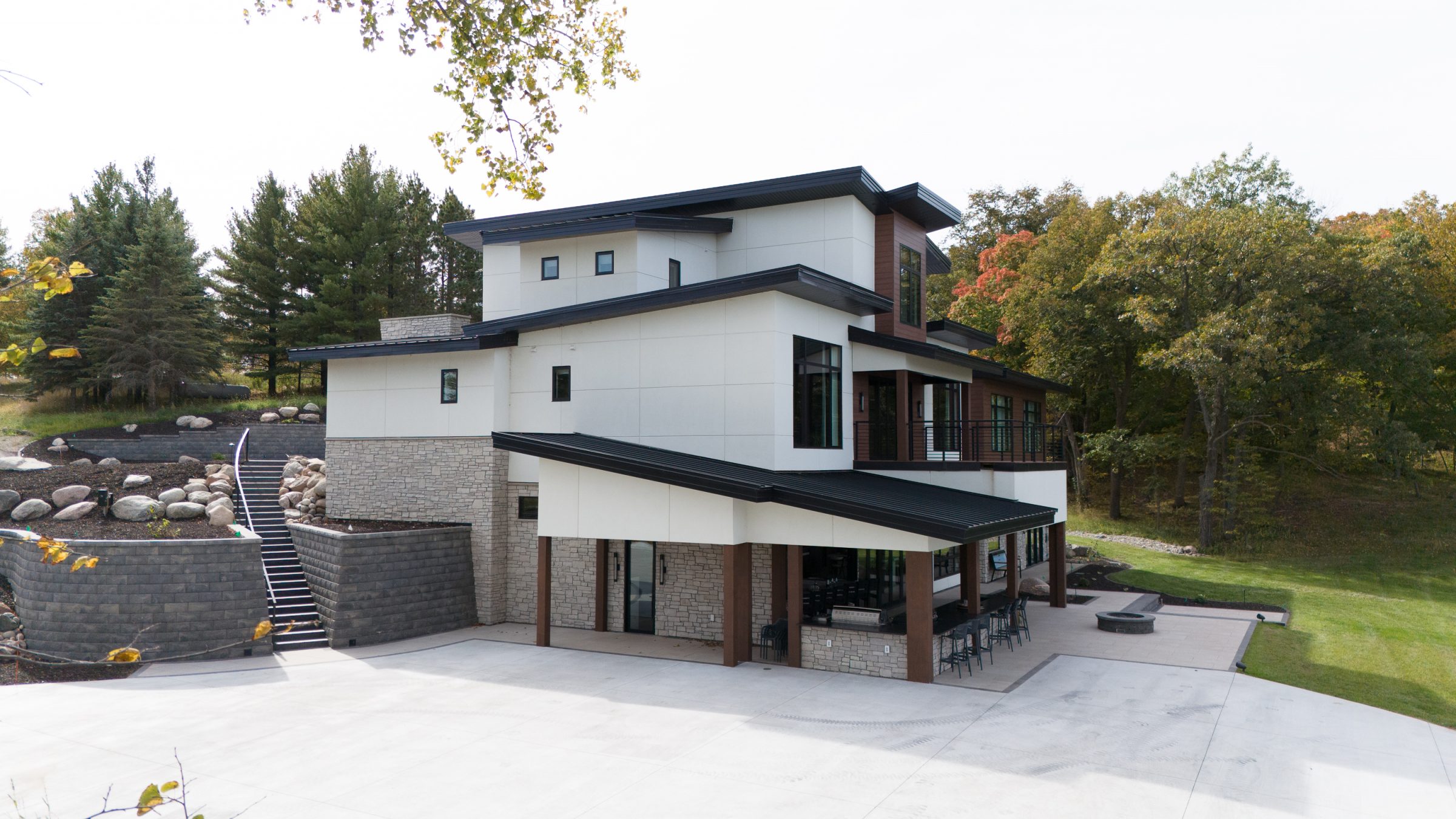
Boulder Wall vs. Retaining Wall: Which Is Right for Your Property?
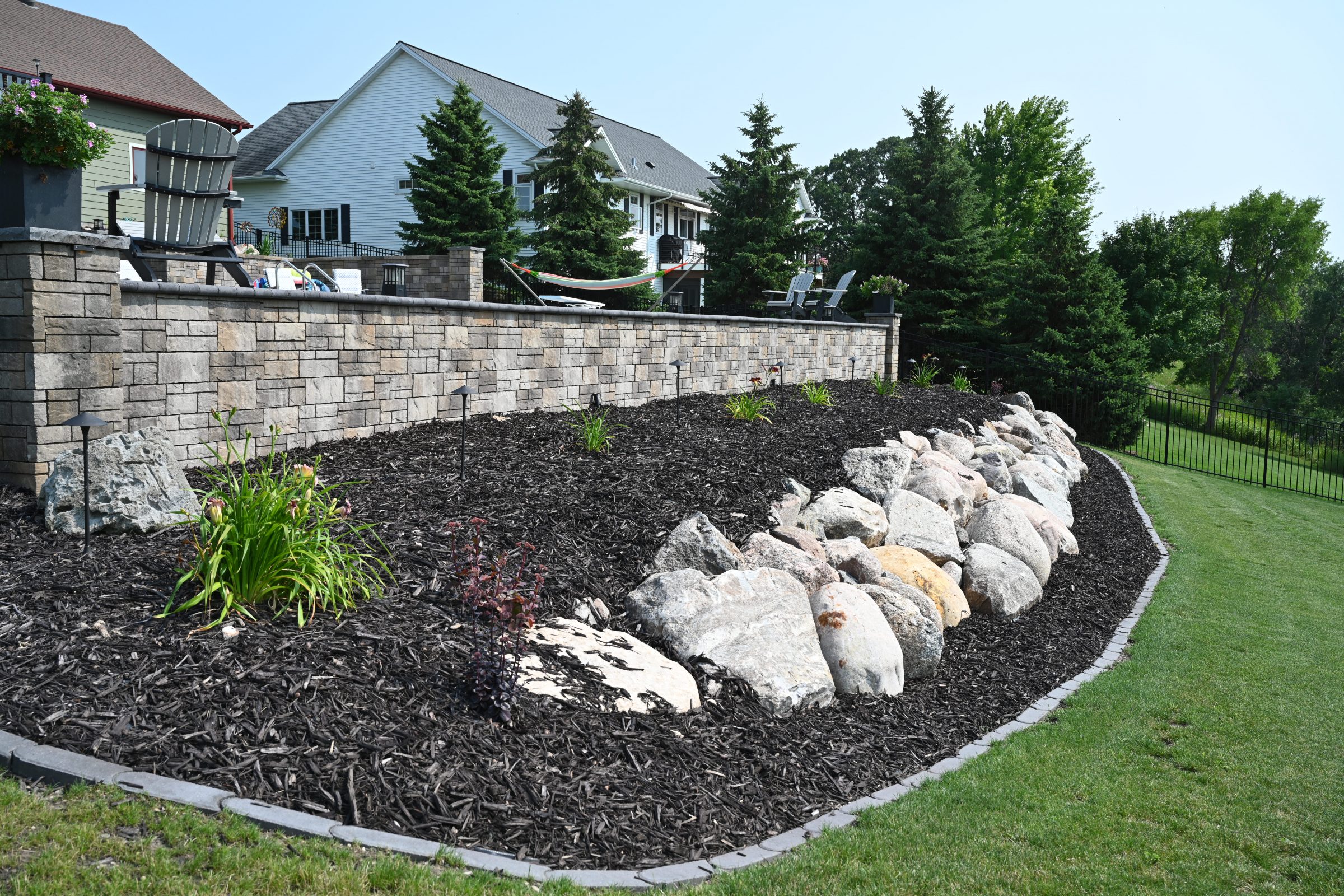
When it comes to improving your landscape, the slope of your yard can present both challenges and opportunities. Maybe you want to prevent soil from washing away, create more usable outdoor space, or give your property a more finished look. A wall can help accomplish those goals, but choosing the right type matters.
Two popular options are boulder walls and retaining walls built with manufactured wall block. While both can help manage changes in elevation and create a more functional landscape, they offer different benefits depending on your property’s layout, your goals, and the style you’re looking for.
So, which option is best for your property? Let’s look at the pros and cons of each.
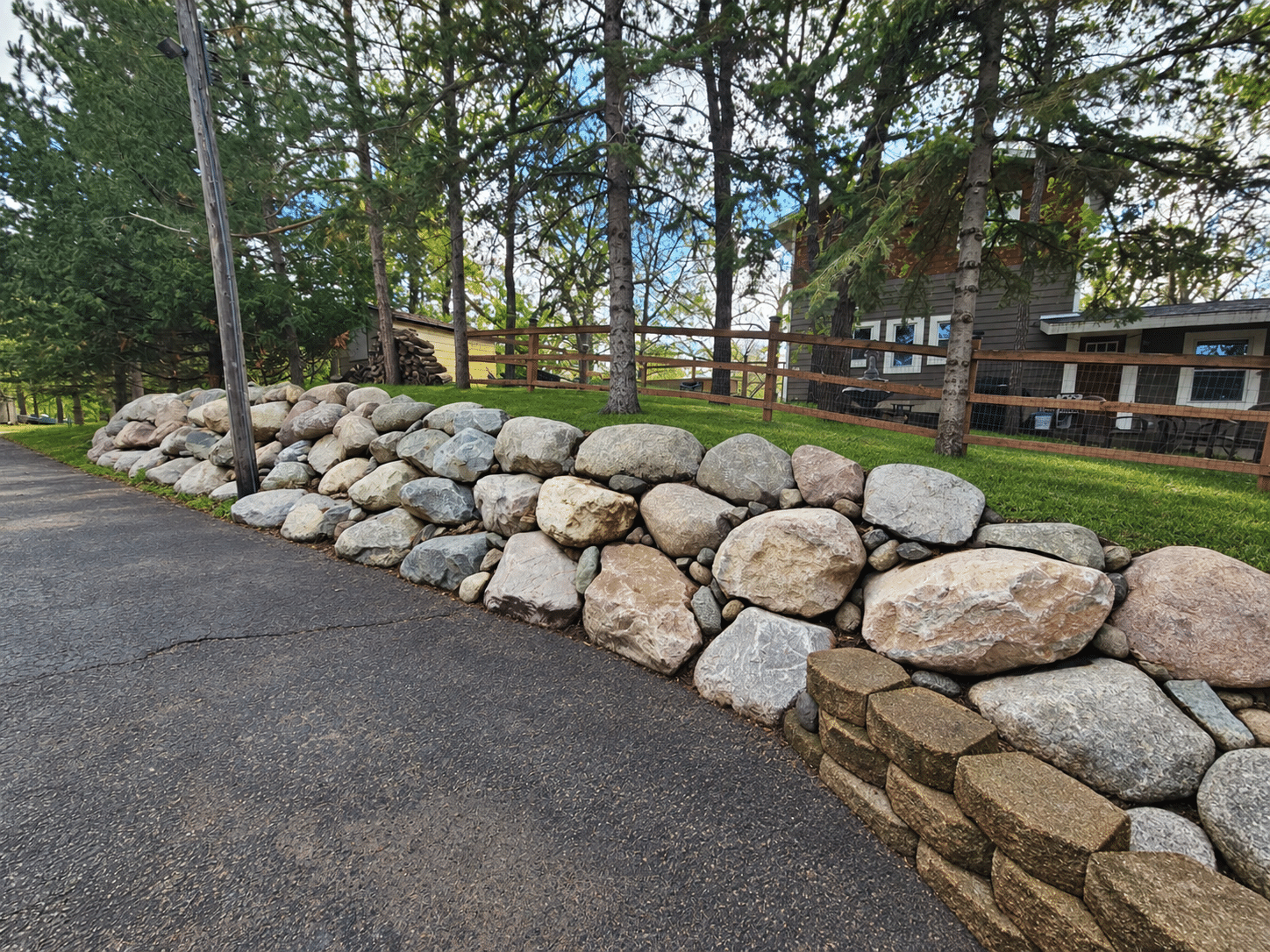
What Is a Boulder Wall?
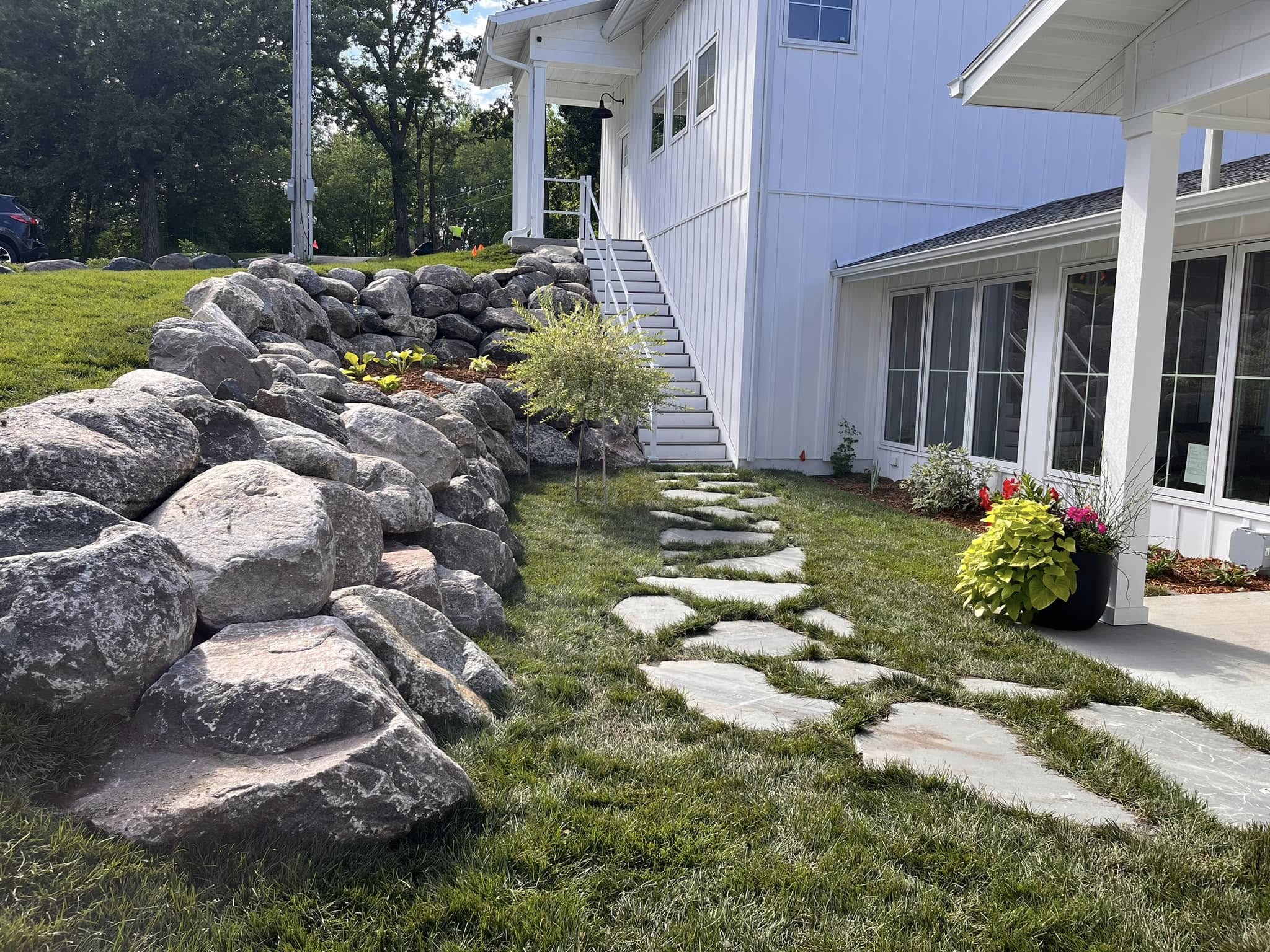
A boulder wall is built using large natural stones placed together to create a sturdy wall. The size, shape, and natural variation of the boulders give each wall its own character, making it a popular choice for lake homes, cabins, wooded properties, and landscapes that benefit from a more natural appearance.
Beyond aesthetics, boulder walls can help hold back soil, manage sloped areas, and define different levels of your yard when properly designed and installed.
Pros of a Boulder Wall
- Natural appearance: Boulders blend beautifully with wooded surroundings, lake properties, and other natural landscape features.
- Unique character: Every stone is different, giving your wall a one-of-a-kind look.
- Long-lasting material: Natural stone is durable and can hold up well through Minnesota’s changing seasons when installed correctly.
- Flexible design: Boulder walls can follow the natural contours of your property and work well in curved or irregular landscape layouts.
Cons of a Boulder Wall
- Requires more space: Boulder walls often need a wider footprint, which may not be ideal for smaller yards or areas with limited room.
- Heavy equipment may be necessary: Moving and positioning large stones requires the right equipment and sufficient site access.
- Less uniform appearance: The natural shapes and sizes of boulders create a more organic look, which may not fit every landscape design.
- Placement matters: Proper stone selection, positioning, base preparation, and drainage are essential to creating a stable wall.
-
When Is a Boulder Wall the Best Choice?
A boulder wall may be a good fit if you want your landscape to feel natural and blend with its surroundings. It can be especially appealing for lake homes and cabins where stone, trees, and other natural features are already part of the property’s character.
Boulder walls are also worth considering when you have enough space to work with the size of the stones and want to create a defined edge along a slope or an attractive transition between different elevations.
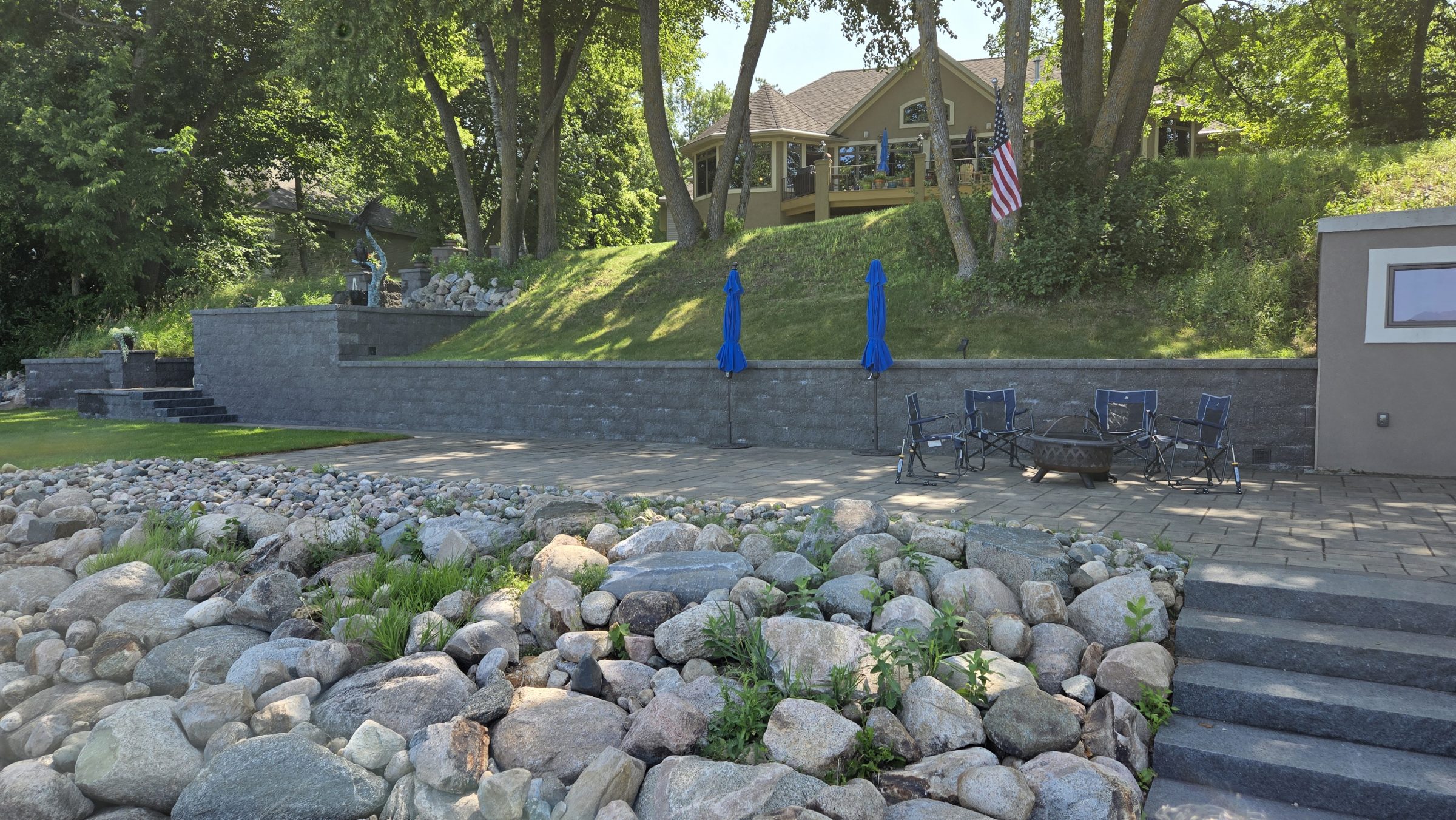
What Is a Retaining Wall?
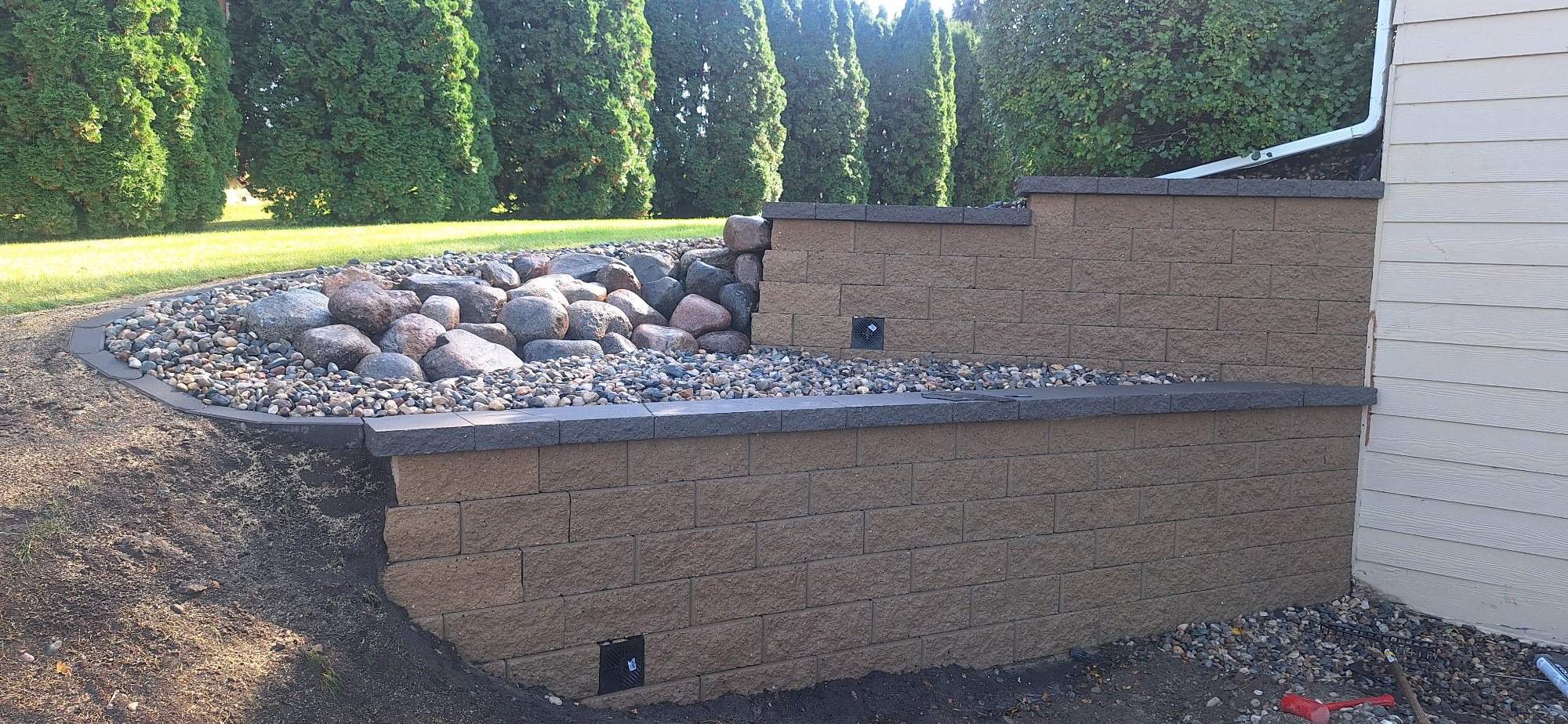
A retaining wall is designed to hold back soil and manage changes in ground elevation. While a boulder wall can also serve this purpose, the term retaining wall often refers to a wall built with manufactured concrete blocks designed specifically for retaining applications.
These walls offer a more consistent appearance and can be incorporated into patios, walkways, garden beds, steps, and other outdoor living features.
Pros of a Block Retaining Wall
- Consistent appearance: Uniform blocks create clean lines and a more structured, finished look.
- Design versatility: Different block styles, colors, textures, and cap options make it easier to coordinate the wall with the rest of your landscape.
- Works well with outdoor living spaces: Block walls can complement paver patios, walkways, steps, and defined planting areas.
- Efficient use of space: Depending on the wall system and design, block retaining walls can provide a more vertical face in areas where space is limited.
- Adaptable to different projects: Properly designed systems can accommodate a range of elevations and site conditions.
Cons of a Block Retaining Wall
- More structured appearance: The uniform finish may not blend as naturally into a wooded or rustic landscape.
- Material selection matters: The block style and color need to complement the property’s existing features and overall design.
- Installation requires careful planning: A stable base, proper drainage, and reinforcement where required are important to long-term performance.
- Costs vary by project: Wall height, materials, excavation, drainage, site access, and engineering requirements can all affect the final investment.
When Is a Block Retaining Wall the Best Choice?
A block retaining wall may be the better option if you’re looking for a clean, defined appearance or want to connect several landscape features into one cohesive design.
For example, if you’re planning a paver patio with steps leading to a lower part of your yard, a block retaining wall can help create distinct levels while tying the overall design together. It can also be a practical choice when the available space calls for a more vertical wall face.
Boulder Wall vs. Block Retaining Wall: How Do They Compare?
| Consideration | Boulder Wall | Block Retaining Wall |
|---|---|---|
| Appearance | Natural, organic, varied | Clean, consistent, structured |
| Best suited for | Natural landscapes and lake properties | Defined outdoor living spaces and coordinated designs |
| Space requirements | Often needs a wider footprint | Can offer a more vertical profile |
| Design flexibility | Follows natural contours | Offers consistent lines and coordinated features |
| Installation | Requires equipment to position large stones | Requires proper base preparation and block-system installation |
| Long-term performance | Depends on proper placement, foundation, and drainage | Depends on proper construction, drainage, and reinforcement where needed |
Neither option is automatically better than the other. The right choice depends on the property’s conditions and what you want your finished landscape to accomplish.
How to Choose the Best Option for Your Property
Before deciding between a boulder wall and a block retaining wall, consider these four factors.
1. The Look You Want
Start with the overall feel of your property. Do you want the wall to blend into the natural surroundings, or do you prefer a more defined feature that complements your patio, walkways, and other hardscape elements?
Boulders tend to create a more natural look, while manufactured block offers a more uniform finish.
2. The Slope and Amount of Soil to Retain
The amount of elevation change on your property plays an important role in determining which wall system is appropriate. A small change in grade may allow for several design options, while a steeper slope or taller wall may require a more specific structural approach.
The wall’s height, soil conditions, slope above it, and nearby features such as driveways or patios all need to be considered before selecting a design.
3. Available Space
Think about how much room you have to work with. If your goal is to create a usable patio or maximize space in a smaller yard, a more vertical retaining wall may be worth exploring.
If your property has a larger slope and room for a wider design, a boulder wall may provide the natural appearance you’re looking for.
4. Drainage and Long-Term Stability
This is one of the most important considerations, especially in Minnesota. Rain, snowmelt, and freeze-thaw cycles can put pressure on a wall when water isn’t properly managed.
Both boulder and block retaining walls need appropriate base preparation and drainage. Depending on the site and wall design, additional reinforcement or engineering may also be necessary.
A professional evaluation can help identify these requirements before installation begins.
The Best Wall Is the One That Fits Your Landscape
A boulder wall can bring natural character to a property, while a block retaining wall can create a clean, coordinated look and help define outdoor living spaces. Both can be excellent solutions when they’re matched to the property’s needs and installed correctly.
The best place to start is by looking at what you want to accomplish. Are you addressing a slope, improving the appearance of your yard, creating more usable space, or tying together a larger landscape project? Those goals will help guide the decision.
At Precision Landscape & Irrigation, we can help you explore options that fit your property, your vision, and the way you want to use your outdoor space.
Ready to start planning your next landscape project?
Visit plandscapes.com/request-a-quote to get started, or call Precision Landscape & Irrigation at (218) 367-LAWN (5296).